Peter, could you start by telling us a little about yourself and your professional background?
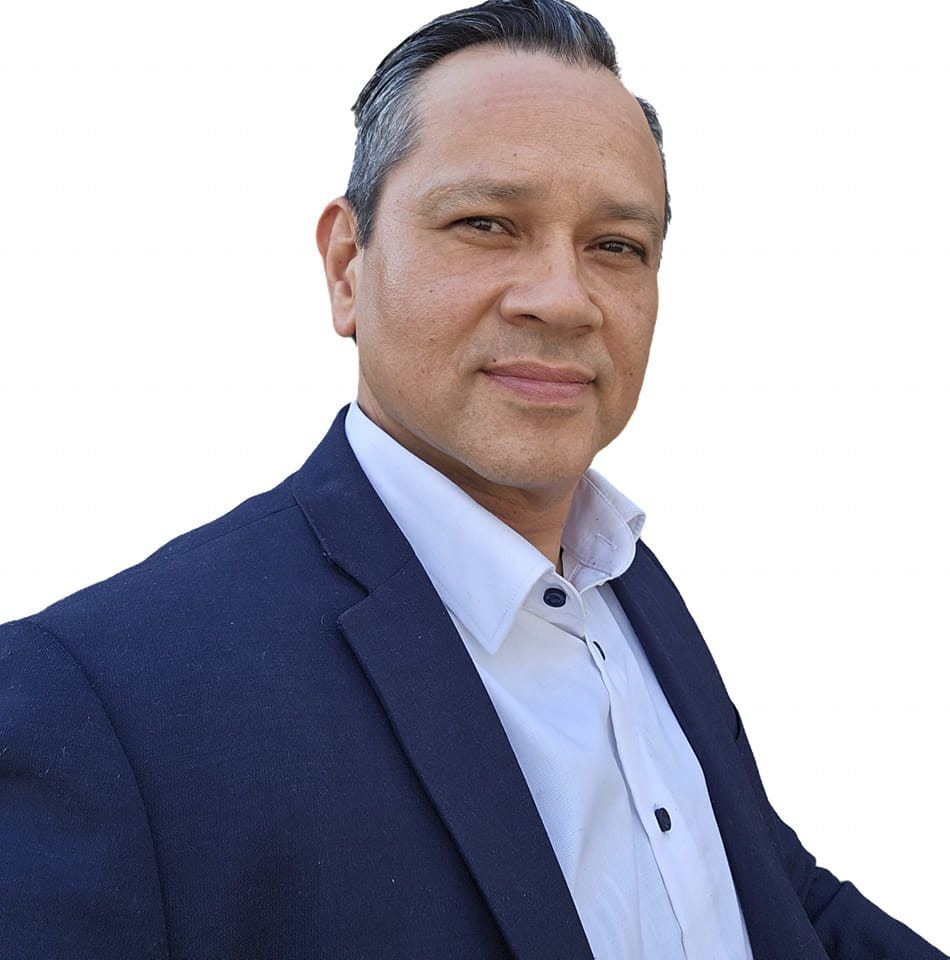
My name is Peter Chulmin Krell. I am half-German, half-Korean. Born in Frankfurt am Main in Hessen, I moved to Hamburg at an early age, where I grew up with video games and home computers. I had my first Atari 2600 in 1978, then a Commodore 64, and after that an Amiga 1000, way before I got my first PC. I am blessed to have been part of a geeky group that not only played computer and pen-and-dice games like D&D and AD&D but also started etching our own circuit boards, burning our own self-programmed EPROMs, and then soldering the components onto the self-made boards by hand. We even got to release tons of demos and several self-made games. So I guess I can say that my roots are in tech and in the gaming industry.
I studied media studies (film, dramaturgy, and theater) and a very tech-driven version of Kulturwissenschaft at Humboldt University zu Berlin, taking as many courses as I could, after having seen how expensive education was in countries like South Korea (Yonsei) and in the United States, where I also spent some time studying. I was literally absorbing knowledge like a sponge. After my Master´s degree, I was enrolled in a doctoral thesis at Bauhaus University in Weimar, which led me to Stanford University, where I got to do some research on Douglas Engelbart´s "Augmentation Project" and the early beginnings of hardware innovation, which led to the emergence of the presentation of the first graphical user interface in 1968 at the Masonic Center in San Francisco.
I was also involved with up to 12 internet start-ups until the dotcom bubble bust. One of them was Moveabit, an audio download platform using Liquid Audio from Dolby, a technology which then became iTunes. We were the first movers in this field in Germany, and convincing leading music industry CEOs about our new secure download technology using ISRC Codes, which were even traceable in analogue copies of copyrighted material, was close to impossible.
Through a fellow student, I got involved with the German GO "Deutsche Stiftung für Entwicklungszusammenarbeit" (DSE) in 2001 where I got to compile the World Bank Report 2001 after September 11th and other diplomatic so-called Summary Reports for diplomatic roundtable discussion groups for the Foreign Ministry and other German Ministries at the time.
After this, I published in the German game developer magazine called "GAME FACE" for 5 years. And after selling my game developer magazine to the biggest European game developer studio, I thought I would never do print again. But with the emergence of generative AI in 2022, after having worked in tech consulting, in journalism, and in the diplomatic field, and having been the Ambassador for the Hedera Hashgraph DLT in Berlin, I felt the time was right to do what we also did with GAME FACE magazine once more: to actively bring people together simply by reporting about their ambitions, their tech developments, their philosophies, their experiences, their needs, and of course their desires and dreams. I have seen visions become market standards, and I witnessed tech entrepreneurs become market leaders.
Similar to GAME FACE at the time, with AI.MAG, which we started in the year 2023, we prefer to focus on sovereign tech development efforts from Europe. My experience is that talent and potential can be strengthened by active networking and by putting relevant strategically important information in circulation at the right time that can enable decision-makers to make better decisions. This is also one of the key visions that Institut EuropIA shares with my early ambitions, now looking back. With AI.MAG we have recently established a cooperation with Germany´s most traditional and only diplomatic magazine, which was established in 1959, two years before Douglas Engelbart began working on his famous "Augmentation Project" at the Stanford Research Institute. www.diplomatisches-magazin.com
Why was Institut EuropIA established in Germany?
Germany is still the strongest economy in Europe. Together with France and Italy, these three nations represent more than half of the 18,81 trillion Euro Gross Domestic Product of all EU member states, which is approximately 21.39 trillion USD.
Therefore, strengthening these regions by active networking and enabling synergetic network effects through spreading information and through organizing international networking events totally makes sense to foster this potential and to bring key people together to enable synergetic European cohesion. Germany needs to become more aware of the fact that Europe could be a much stronger region if this understanding was more actively lived and if this new European mindset became a reality for the majority of EU citizens. With Institut EuropIA, we are ready to make this shift in mindsets happen.
What are your objectives, and what types of partners are you looking to engage?
With Institut EuropIA, we are ready to make this shift in mindsets happen by collaborating with key knowledge holders, innovators, leading corporations, as well as startups and SME organizations, universities, GOs, and other opinion leaders who drive this change. Key innovators come from the regions of new material science, photonic AI, Quantum Computing, analogue algorithms, and functional coding.
We need to enable a new European educational infrastructure that closely works together with the industry and that generates a cultural understanding of how technologies are being used and what impact these forms of usage will have on society, especially with the increasing advent of autonomous technologies and humanoid robotics in real life.
We need to understand the challenges these tech developments are beginning to have on our everyday lives and how profoundly they will affect or even reshape our self-understandings, our traditions, our habits, our lifestyles, and even our value systems that are already starting to show early signs of severe impact and profound change. In the same way that AI is becoming more autonomous and physical, humans are challenged to develop more profound ways of stoic self-centeredness, perseverance, and the ability to uphold agency (ability to determine action) in the face of disruptive changes. So there is a need to invest also in soft sciences, or what Americans call "humanities", or us Germans "Geisteswissenschaften" (the science of spirits & ghosts or of the immaterial), before some of us may forget what these actually were and how they used to contribute to our society´s ability to self-reflect in a historical context of the history of ideas. Many interesting texts like the writings of Vilém Flusser aren´t available online and that way eventually also a special asset category, arguably similar to newly found Coptic texts.
What is the current state of AI in Germany, both in terms of implementation and productive capacity?
Looking at our German ecosystem and looking at activities inside the Institut EuropIA, I see the need for European tech to engage more actively in visible and effective actions that express European Cohesion. We have well understood that catching up in the current GPU-driven digital AI race will be impossible to achieve at this point. And we also understood that true European sovereignty can also be achieved with hardware developed in Europe. And looking at the talents and innovation that we have in Europe today, it´s hard to ignore that there are other very promising alternative ways to establish real European tech sovereignty, with innovative hardware made in the EU itself. In this context, defining and bringing about new standards should be at the heart of our mission. Especially when looking at photonic AI, with Q.ANT for example, or other attempts, like neural computing or Quantum Computing, new hybrid technology stacks are foreseeable. And all these point into a future beyond CMOS and beyond the Von Neumann architecture that will enable unparalleled sustainable performance gains beyond any existing benchmarks. And this may render existing tech hegemony close to obsolete in the near future if we play this right.
Driven by this understanding that many European researchers share, developing the new key applications for this new tech will become even more achievable if all nations in Europe come together and agree on changes in the currently existing educational systems to bring these changes to life. And these are the type of changes that will make Europe become the new center for these new sustainable technologies, which will lead not only by superior performance but also by being less expensive to implement and operate, but which are also more sustainable by reducing resource requirements by orders of magnitude with no water consumption when looking at photonic AI in particular.